
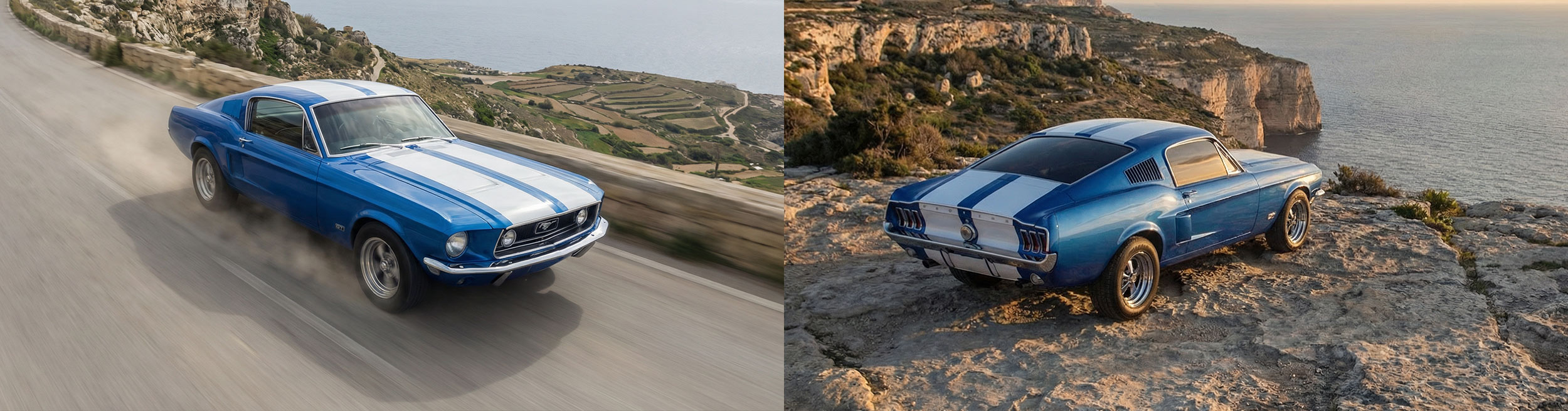
From Dealer Snapshot to Collector Appeal
Many car dealers face a similar challenge: vehicles need to be promoted quickly, but the visual presentation often stays limited to ordinary listing photos, forecourt snapshots, or simple boosted social posts. While this may be enough to document a car, it rarely creates the kind of attention, trust, or desire that helps a dealer stand out in a competitive market.
This case study explores how a more strategic visual approach can turn standard dealer-style imagery into stronger automotive communication — designed not only to present the car, but to connect with the right audience and build perceived value around both the vehicle and the dealer.
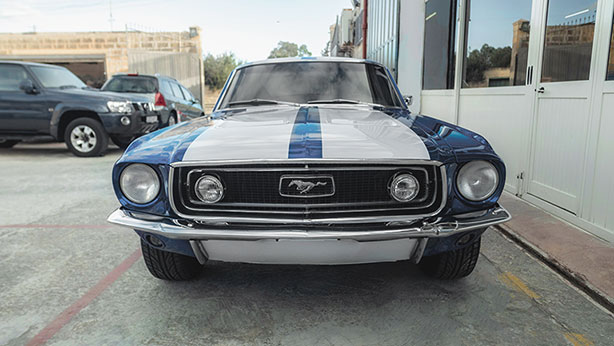
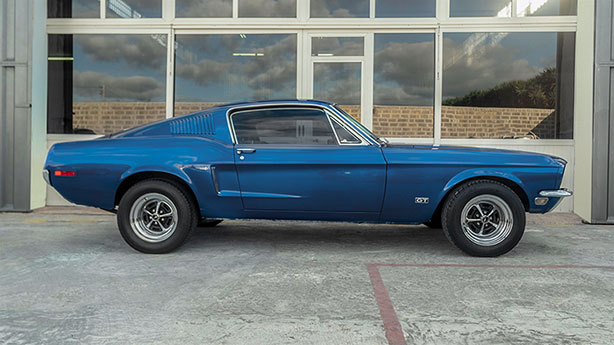
The Dealer Problem
For many smaller dealers, the reality is practical. Cars are photographed in the showroom, outside the premises, or wherever space is available. Lighting is rarely ideal, backgrounds are weak, and the result feels functional rather than aspirational.
That may be enough for a basic listing, but it does little to separate one dealer from another or build stronger brand awareness.
FROM LISTING TO STORY
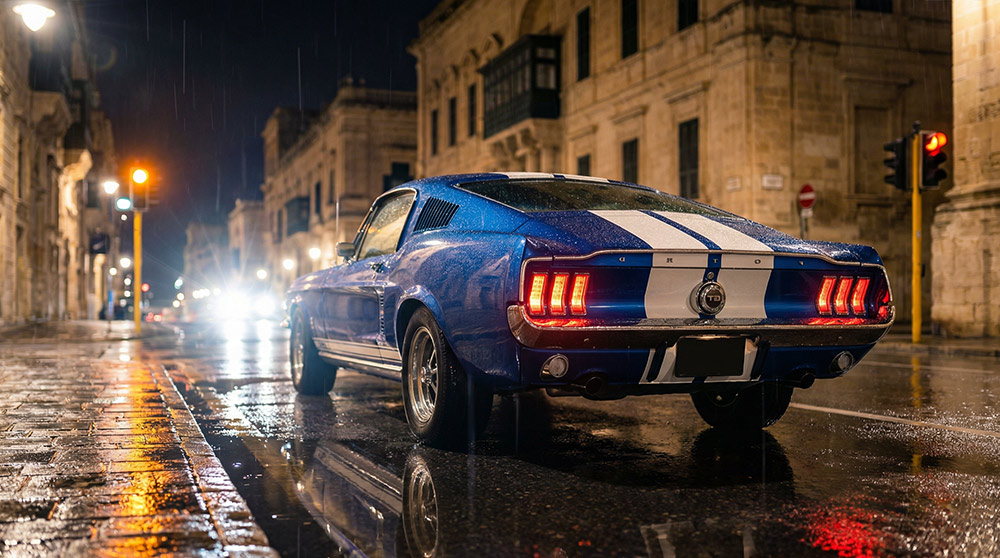
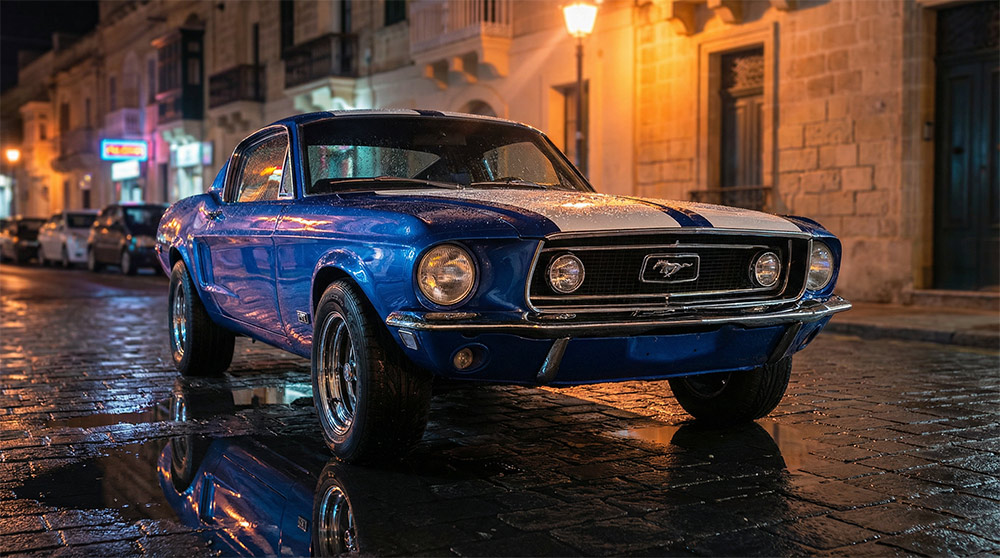
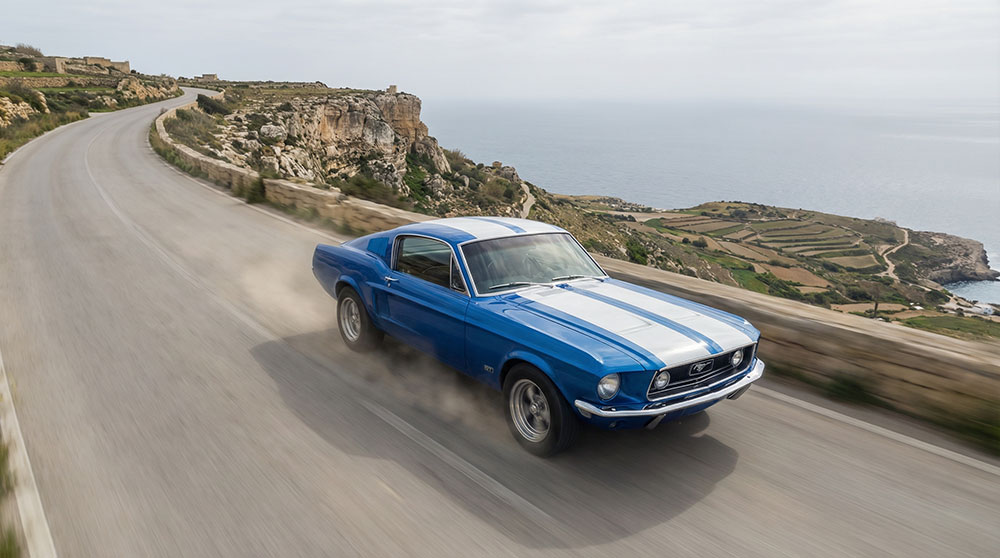
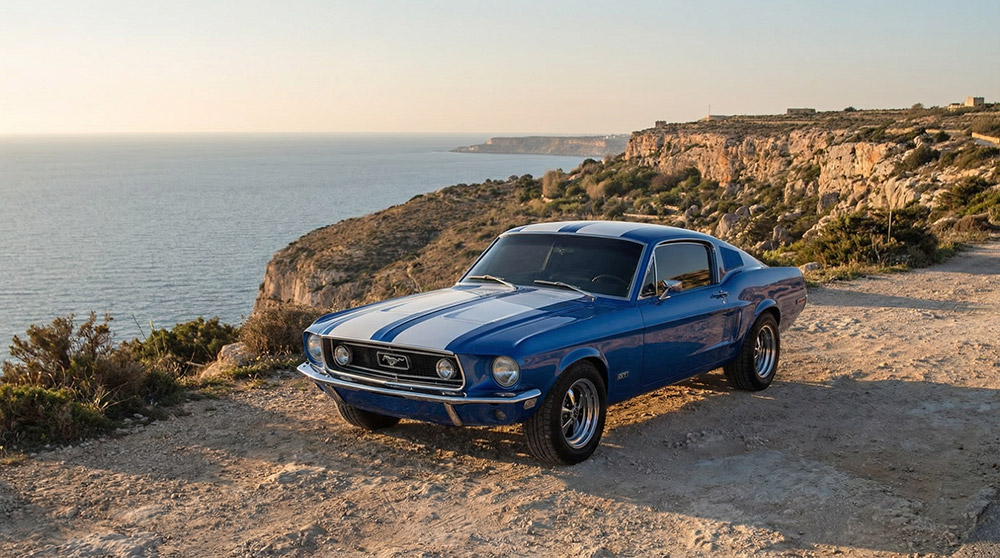
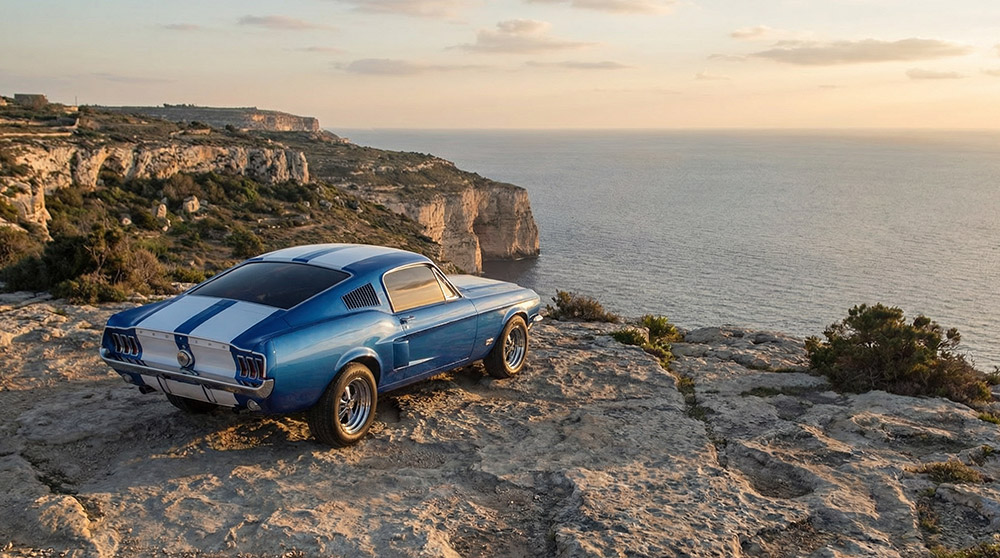
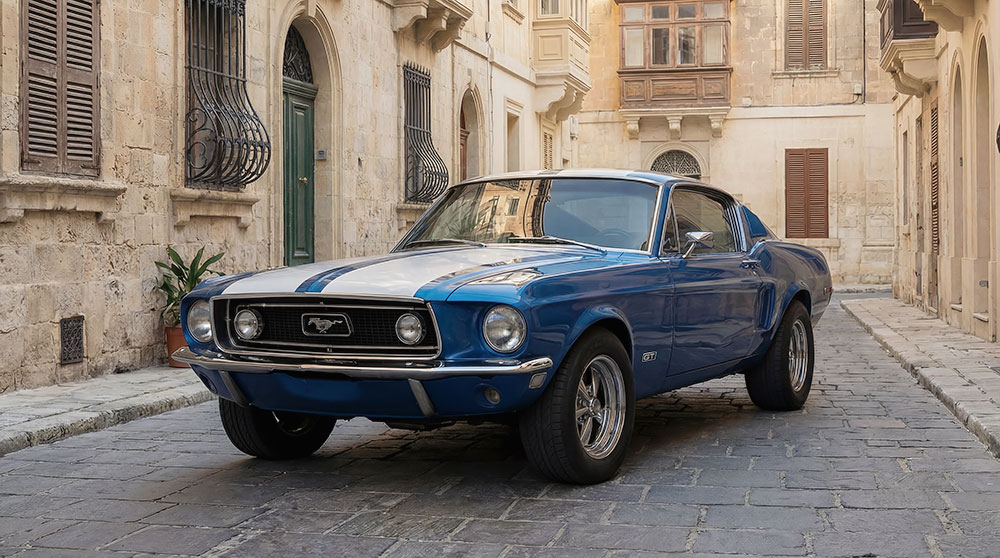
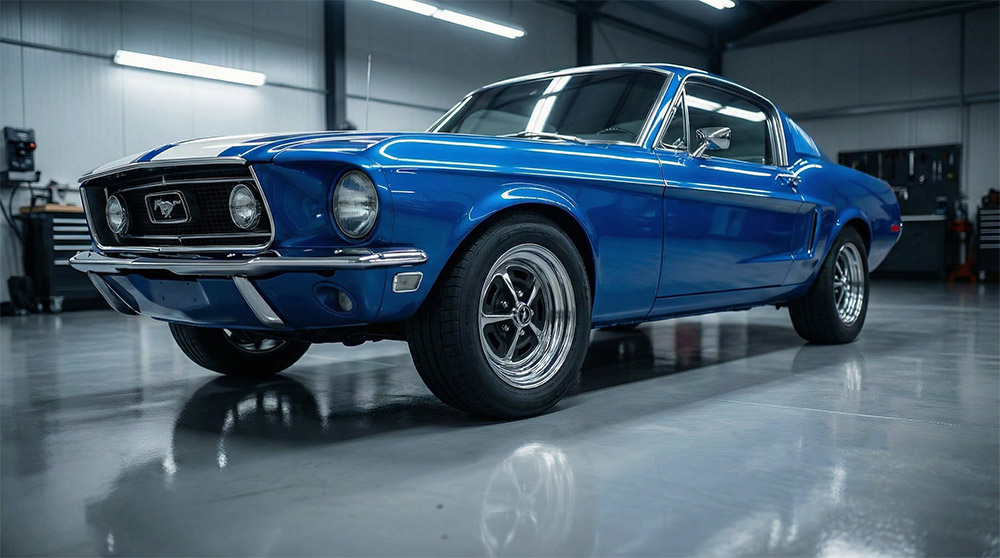
This example was developed around a vintage Mustang and a specific audience: classic car enthusiasts and collectors. Instead of treating the car as a standard listing, the visual direction was shaped around collector appeal, atmosphere, and lifestyle relevance.
Starting from the kind of source image a dealer might normally use, the concept was expanded into a broader visual series — including local streets, countryside locations, and more cinematic garage or night scenarios. The goal was to show how one vehicle can support stronger communication across a website, social media, and more editorial-style content.
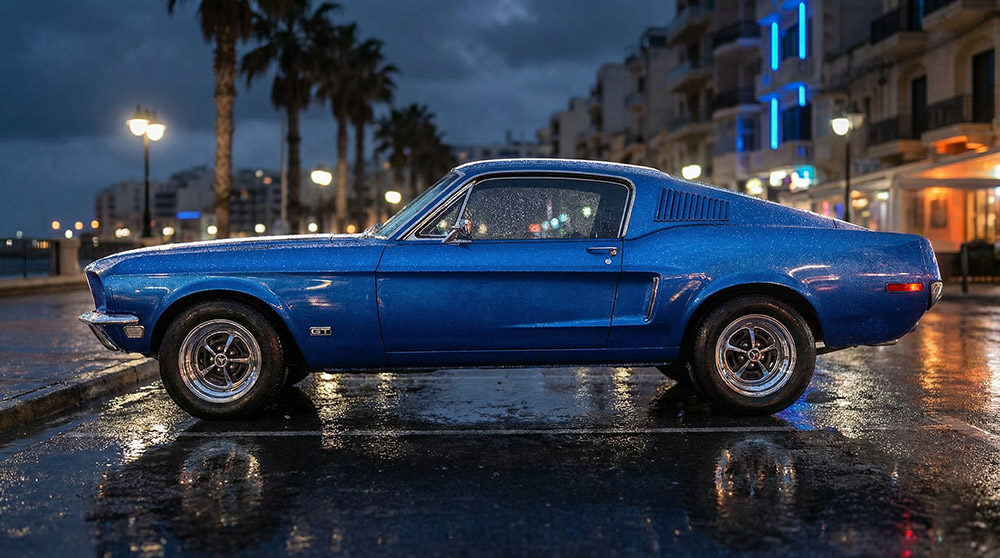
Beyond the Listing
A listing image can show the car, but it does not always shape how the car is felt. For more valuable vehicles — or for buyers who respond to rarity, design, heritage, and lifestyle — presentation matters.
That is where stronger automotive storytelling begins. It adds more than visual polish. It builds atmosphere, trust, desirability, and a more distinctive identity around both the vehicle and the dealer.
What This Solves
This approach helps dealers move beyond ordinary inventory presentation. It creates stronger visual material, more flexibility across channels, and a more targeted way to speak to both general buyers and niche audiences.
For smaller dealers, that can mean better perception and a more professional presence. For more established dealers, it can support richer storytelling and stronger brand value around selected vehicles.
How Hynek Approaches Automotive
Hynek starts with the audience, the vehicle, and the business objective. From there, the visual direction and channel choice are shaped to support the real purpose of the campaign.
The result is not just better-looking content, but more effective automotive communication.